
Are you a UK homeowner planning a home render project, but unsure which is the best render for UK weather? If yes, you are exactly where you should be. In this article, we are going to discuss four of the best render types. Also, we will explain impact of UK weather on homes, and which render type is most recommended by experts in the light of weather.
Intro to Rendering & Its Purpose
It is always good practice to get the basic straight first. Let us start by explaining what house rendering is
In most simple words, house render is a protective coat that we apply to the external walls of a building. Purpose is to beautify the house, and protect it from harsh weather conditions, and general wear & tear. Also, good exterior rendering system prevents the algae growth.
Traditional Cement Render: What Makes it Different from Modern Solutions?
House render industry has made a lot of progress over the time. In past, render used to be a simple a cement-based mixture. Sand and aggregates were also blended into it.
That simple cement-based render is now considered outdated, but still a lot of people opt it for its affordability. Nowadays, many advanced rendering solutions and types have been introduced into the market.
These types such as acrylic are less prone to cracking as cement. Also, many modern renders are better at resisting water and algae.
Main Types of Renders
There are three distinct groups in house-rendering:
Type 1: Mineral Renders
Natural materials are used to make these renders. That include components like sand, cement, or lime. Earth’s resources are their basic foundation, so they are eco-friendly and suitable for various applications.
Type 2: Acrylic Renders
Acrylic renders are the opposite. They are made with synthetic elements. These man-made additions enhance the render’s properties. Durability and aesthetics make them a popular choice for specific purposes.
Type 3: Silicone Renders
Silicone renders feature artificial components. Their design offers unique characteristics and advantages. The reasons they have gained fame is their water resistance and durability. That makes them ideal for certain climates.

Why UK Homeowners Must Consider Weather Resilience
When it comes to climate, modern UK is a diverse landscape with different types of harsh weather conditions. The country experiences a range of weather conditions. It includes rain, frost, and fluctuating temperatures. UK weather can make things worse for your house if you make the wrong render choice.
Rainfall
Constant rainfall leads to walls to cracking and dampness which hurts thermal insulation and promotes algae growth on walls.
Temperature Changes
Fluctuating temperatures also lead to cracking the walls. All these factors can diminish the worth of your house by damaging its appeal.
Wind
Strong winds can make it difficult to apply the render. Sometimes, the result can be render drying out too quickly. That can lead to cracking.
Bad weather conditions can have profound terrible impact on longevity and performance of the render. If your city faces extreme weather conditions regularly, you should choose the most weather-resistance render type you can.
Some of the most famous ones are acrylic, lime, silicone and Monocouche. Let’s explore all of them one by one.
Silicone Render – Is This the UK’s Most Weatherproof Option?
Crack-Resistant, Flexible, and Self-Cleaning – But Is It Worth the Price? Let us discuss silicone renders that belong to third of three types we mentioned above, in detail. Is it really the best render for UK weather?
Great performance and durability (average lifespan: 25-30 years) has made Silicone render really popular in recent years. It is a durable render for UK homes.
Silcone render contains silicone, a rubbery polymer. What makes silicone as a polymer impressive is its high resistance to temperature. Also, coming in a huge range of colours is one of the reasons of fame of acrylic rendering. Make your house look as beautiful as you want.
Self-cleaning title is given to silicone render for a reason. It is designed to keep the wall dry, which means less moisture and fewer algae. Experts recommend it because it is easy to apply. Both professionals and DIY renders love Silicone render for this reason. However, it is still better to hire professional people with relevant skills to have the maximum smooth finish.
People refer to it as thin coat render. That name comes from the way it is applied. It is applied on top of a basecoat layer and in thin layers. The top layer is hardly few millimetres thick.
Most Suitable for: Damp and dank climates
Pros of Silicone Render
- It is drip-repellent
- It is self-cleaning
- Weather resistant (even extremely wet & cold climates)
- Less weight and high flexibility reduce the stress on the building’s structure.
- It is water resistant.
- It is highly breathable.
- It is highly durable.
Cons of Silicone Render
- Higher costs
The cost can vary between £10 and £15 per square metre. Labour cost will add up if you hire someone for applying it. Then, size of your property will matter. Also, the current state of walls will be a contributing factor.
Lime Render – A Time-Tested Solution or Just for Old Houses?
Used for Centuries – But Is It Still a Good Fit for Modern UK Homes? We’ll now look at lime renders that belong to first of three types we mentioned above, in detail.
Lime render is a flexible, breathable option, made to beautify the period house. The ones built in post first world war era. Despite being so old, it has made the entry in the market once again, as the retro house fashion trends of 70s are alive once again.
If you have British, 17th-century country house from Victorian era, lime render is the best option. This traditional material that has been used for centuries. It is also coming back as sustainability is becoming more and more relevant. Lime render is eco-friendly and breathable.
Also, if you are someone who wants to enjoy the durability and strength of cement-based renders, but also wants to do something trendy, Lime Render is a great option for you. It gives natural finish, and trendy look.
It lets the building’s moisture evaporate quickly. This minimises the risk of moisture getting trapped inside and increasing potential dampness.
Applying lime render is a little tricky process. It is highly recommended to not do it yourself but hire individuals with impressive relevant skills and experience. It requires a lime wash coat to have a complete finish. Also, professional renders UK know that it can be irritant to the skin. Applicators must wear protective gear.
Most Suitable For: Grade II listed buildings or heritage sites
Pros of Lime Render
- Lime Render is breathable.
- It prevents damp issues and lets the moisture escape from the walls.
- It is highly flexible.
- It is less prone to cracking then cement-based renders.
Cons of Lime Render
- It needs high maintenance, unlike modern renders.
- Applying it is time-consuming process.
- It is not simple enough for DIY enthusiasts.
Acrylic Render – Cheap and Colourful, But Can It Survive UK Winters?
Budget-Friendly and Stylish – But Will It Crack Under Pressure? Let us discuss acrylic renders that belong to second of three types we mentioned above, in detail. Many people believe it to be the best render for UK weather.
Add acrylic resin to the mix to get the acrylic render. It is famous for its two great features. First, Acrylic resin is cost-effective. Secondly, it is one of the best options, when it comes to aesthetics. A huge variety of colour shades and textures has made it all-time favourite rendering option of UK homeowners passionate for beautifying their homes.
Acrylic or polymer ingredients are used as binding agent in the process. So, we get plenty of vibrant colours and beautifully textured finishes.
Pros of Acrylic Render
- It is highly flexible.
- It reduces the risk of cracking.
- It comes ready-to-use, and pre-mixed.
- It is available in wide range of colours and mixes.
- It can be applied in less time.
- It requires less maintenance.
- It gives modern and stylish look.
- It is highly resistant to mechanical damage.
Cons of Acrylic Render
- It is expensive.
- It requires skilled application for a professional finish.
- It picks up atmospheric loads easier, and not suitable for locations with a lot of traffic and congestion.
- Its breathability is limited.
- It lets moisture trap inside, and thus not suitable for rainy environments.
Monocouche Render – Is One-Coat Really Enough for the UK Climate?
Fast and Flashy – But Can It Really Handle the British Rain? Let us discuss monocouche renders that belong to first of three types we mentioned above, in detail.
This cement-based, thick coat render is extremely prone to cracking, water damage and discolouration. British rains may not be so easy to handle for Monocouche Rendering System.
Yet sometimes people who live in relatively less rainy environments like it because of its simplicity. It does not need paint and lasts longer in less rainy areas.
The term monocouche indicates that it only needs one coat. Its content allows it to add pigmentation. That is why it has coloured appearance, which means that there is no need to paint.
Most Suitable for: Cases where fast application is required.
Pros of Monocouche Render
- It is energy efficient.
- You do not need to paint it.
- It comes in many colour options.
- You can apply it directly to the bricks.
Cons of Monocouche Render
- The flexibility of Monocouche render UK is not impressive.
- It is costly to repair if damaged.
| Render | Weather-Resistance | Life Span | Maintenance |
| Silicone | High | 25-30 Years | Low |
| Acrylic | High | 20-30 Years | Low |
| Lime | High | 50 Years | Higher than above two |
| Monocouche | Average | 25 Years | Higher than above two |
What Do UK Professionals Really Recommend?
We Asked the Experts – Here’s What UK Rendering Contractors Say
Silicone is one of the top choices of UK experts. Its durability, water resistance, and weather-resistance properties make it simply the best. The superior performance in the UK’s damp climate makes it the best candidate in the UK.
Thermal Wall Insulation – The Secret Factor Most Homeowners Ignore
Your Render Might Look Great, But Is It Actually Saving You Money?
To get the answer to this straightforward question, we first need to know what thermal wall insulation is and what it has to do with house rendering.
Materials and processes that reduce heat transfer through walls and enhance energy-efficiency are called thermal wall insulation. Things like fiberglass, mineral wool, or foam boards, are installed within or on walls. They serve as barrier against heat flow. Preventing or reducing heat loss is one of the biggest challenges in harsh cold weather of UK.
Walls, windows, roof, and floor radiate heat. Then, we have to spend more money on heating the space over and over.
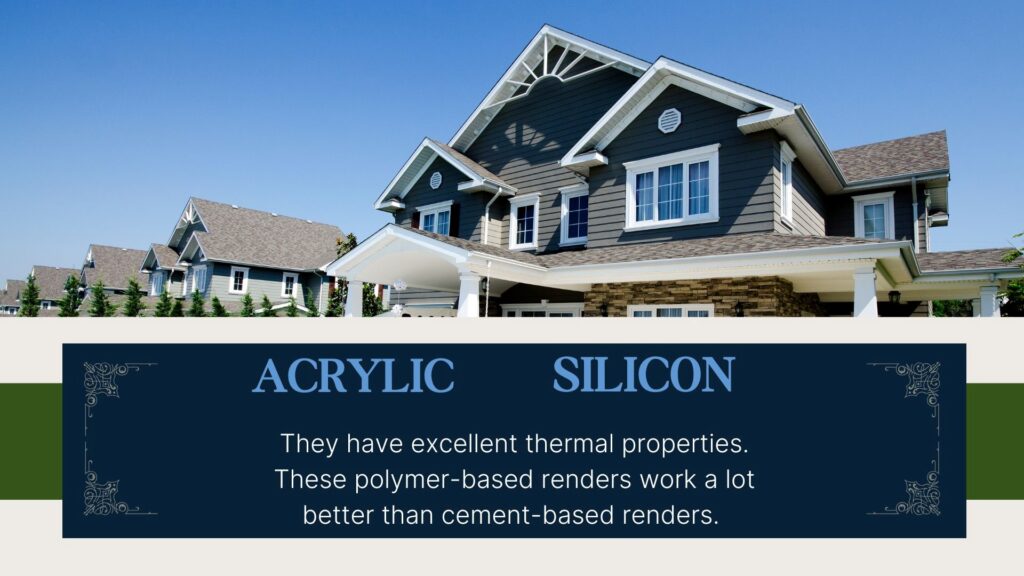
House rendering can play an important role in increasing thermal performance of the home. It is an added layer of thermal insulation which further prevents heat loss. The house becomes more energy-efficient, and the energy bills significantly reduce. So, when choosing the house render type, it is crucial to keep thermal wall insulation factor in mind.
Final Verdict: What’s the Best Render for Your UK Home?
The answer should be clear now. Silicone is the winner of the competition and best render for UK weather.
But it can vary from case to case, according to requirements. If you’re planning to render your house, it is better to get in touch with reputable rendering contractors UK. Let their experts know your requirements and weather conditions so they can suggest which the best render for your case is. Exterior Rendering Systems is one of the best UK external walls rendering vendors and advisors. Their house rendering services are among the best in the UK.
