
What is the best time to install external wall insulation?
We usually picture cold weather when we hear or think about external wall insulation. In winter, we feel a stronger urge to have a weatherproof home exterior and get our home insulated when the cold weather sets in.
But, contrary to what most of us do, it is better to install external wall insulation in summer. Planning ahead in warmer months can save money and reduce stress as opposed to delaying until winters. Yes, the task does not feel urgent enough until the cold sets and heating bills start to rise. But the pros of getting home insulation in summer are too amazing to ignore.
In this article, we’ll break down why summer offers the ideal conditions—not just for installation, but for long-term performance and savings.
Most Homeowners Wait Too Long & It Costs Them More
The pattern of demand and supply is much predictable in the external wall insulation industry. Demand starts to rise as the autumn approaches. Similarly, the schedule of external wall insulation providers becomes tighter. They are fully booked and hence begins the panic insulation season.
This panic insulation season makes the project much more difficult. You may face problems like:
Longer waiting times to get the booking from reliable external wall insulation installers London.
They may charge you more due to their hectic routine and increased demand. The rush may make you compromise on the quality.
Are you thinking, “Should I install insulation before winter?” Yes, obviously it is the better choice. But if you are reading this in December, you have realised it too late.
Homeowners who plan ahead and install during summer avoid this rush entirely. They have more time to compare quotes, check credentials, and choose experienced professionals rather than settling for whoever is available.
Summer Weather Creates the Perfect Conditions for Installation
We need adhesive, renders, and good finishes to have a great external wall insulation system. Installation during dry and warm temperatures brings multiple advantages. Let’s mention some reasons why install external wall insulation in summer.
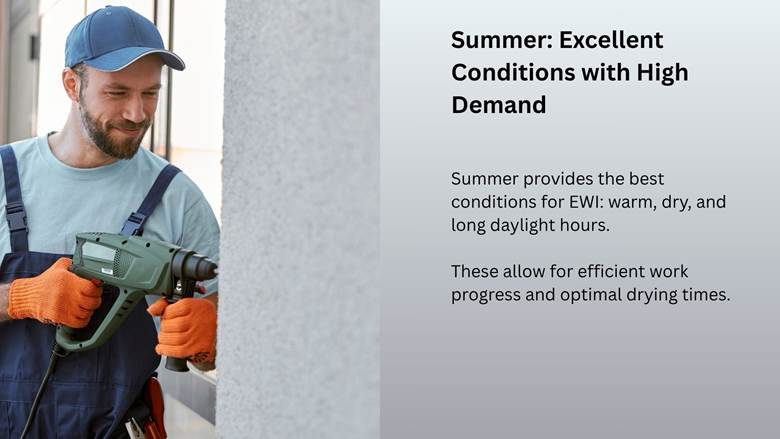
Dry weather improves adhesion: Materials bond more effectively to external walls when surfaces are dry.
Faster curing times: Warm temperatures help adhesives and render layers set properly.
Fewer interruptions: Less rain means fewer delays, keeping projects on schedule.
On the other hand, wet and cold weather can slow down the process. Also, it can affect the quality of the finish. While installations are possible in other weather types, they often require more careful planning and contingency time.
Summer Reveals What Winter Doesn’t
The insulation issues often remain uncovered during cold weather. Temperature differences do not reveal due to the heating system running all the time. You rarely open the windows. Signs of damp and mould go unnoticed.
The scenario changes in the hot weather. Problems become easier to detect. If some rooms are colder or hotter than other living areas, you can feel it. It could be a sign of poor cavity wall insulation or uneven thermal resistance.
Exterior Can Dry Faster & Perform Better in Summer
Moisture is one of the key challenges in this industry. When materials don’t dry properly, you end up compromising on both appearance and durability.

Installing in warmer months helps each layer dry thoroughly. You can have a more durable finish and reduce the risk of trapping moisture. Opting for summer external wall insulation installation helps ensure the system performs as intended for years to come.
Summer Makes External Checks Easy
Teams can easily work in summer, for various reasons. Let’s mention two of the most important ones:
1: Easy Conditions To Identify The Problems
Dry and bright weather makes inspection easier. The team can easily check all of your external walls in detail. They may notice discolouration on brickwork, algae growth, cracked rendering, or visible gaps near vents and joints.
These things can be signs of failure of previous installation. If you hire a new team for external wall insulation in Kent, they will need to know the mistakes of previous contractors. Summer makes this identification easier.
2: Stable Environment To Work In
Winter can bring harsh weather conditions and make it difficult for teams to work. There are no damp grounds, icy surfaces, and strong winds. It’s also a more convenient time for professional assessors to carry out detailed surveys.
Install Now, Save Big When Winter Hits
Your home will be fully prepared before winter hits. External wall insulation makes a thermal barrier around your home which helps reduce heat loss in winter. Also, you get to improve your home’s energy efficiency since temperatures do not drop too much, and energy systems have to put in less efforts.
Early installation helps you reap more benefits from these improvements.
The Hidden Summer Advantage Nobody Talks About: Easier Scheduling
One of the biggest but least discussed benefits of summer installation is availability. If you wait untill October or November, be prepared for long lead times and reduced contractor availability. In colder months, experienced external wall insulation London contractors are often booked weeks or even months in advance.
In summer:
- Appointment slots are easier to secure
- Projects can start sooner
- Timelines are more predictable
Installation in the summer gives you the freedom to choose based on quality, not urgency. You can ask more questions with potential contractors and easily perform due diligence. Last-minute decisions in winter are often pressure-based. Results may backfire sooner or later.
Summer Renovations Increase Kerb Appeal Instantly
External wall insulation is not just about weatherproofing your home or reducing your energy bills. It is also about making your home look much more beautiful, stylish, and modern. Most systems are finished with a fresh render, which can:
- Modernise the appearance of older properties
- Improve cleanliness and brightness
- Increase perceived property value
Is Summer Really the Best Time to Install External Wall Insulation? (Expert Verdict)
Let’s look at a practical comparison:
Summer Installation
Pros:
- Better weather conditions
- Faster project completion
- Better material performance
- Easier scheduling
- More contractor availability
Cons:
- The attic can be too uncomfortable to work in
Winter Installation
Pros:
- Possible off-peak pricing in some cases
Cons:
- Weather delays
- Slower curing times
- Limited installer availability
- Greater urgency and stress
Final Verdict
While external wall insulation can technically be installed any time in the year, summer consistently offers the most reliable conditions and least disruption. A lot of advantages make summer the best time to install external wall insulation.
From both a practical and financial perspective, it stands out as the best time to plan and complete the work.
FAQs
Question: Should I install insulation before winter?
Answer: Yes. It helps reduce heat loss early and avoids the rush when demand for installers increases.
Question: What is the best weather for installing external wall insulation?
Answer: Dry, mild to warm weather is the best in most cases. These conditions allow materials to bond properly and cure efficiently, which gives better long-term performance.
Question: Can external wall insulation be installed during rainy weather?
Answer: Rain may delay the process or affect drying times. Most installers recommend pausing work during heavy rainfall to maintain quality.
Question: How long does external wall insulation installation take?
Answer: Most projects take between one to three weeks, depending on the size of the property, weather conditions, and system complexity.
Question: Is summer external wall insulation installation cheaper or faster?Answer: It is often faster due to better weather and fewer delays. Costs can vary, but summer installation may help avoid peak-season pricing and urgent winter demand.
