
Rising Energy Costs in UK
The UK has become one of the most expensive European countries for electricity. The major source of electricity production has been gas for a long time. Prices have been increasing since 2022 which is one of the political outcomes of the Russia-Ukraine war.
UK homeowners now have no option other than re-evaluating energy upgrades. Rising energy prices are the reality.
Recent News
- BBC’s recent news has it that 0.2% increase in energy price cap will be applicable from January. It will affect those on variable tariffs in England, Wales and Scotland.
- Local UK sources have reported that energy price cap is set to rise to £1849 per year for typical households from April.
The importance of external wall insulation has further increased among Brits after this news. But a lot of people still have such questions in mind.
- Why should I pay the heavy upfront cost to get the external wall insulation?
- Is the external wall insulation cost worth its benefits?
- How long do I have to wait for payback?
The blog explains the answers to these questions in depth. Let’s start without waiting! It is going to be your complete external wall insulation cost calculator.
What is Energy Price Cap?
So, what is this hype all about? What actually is the energy price cap and how does it affect the household electricity bills in the UK. Let us first understand it.
Energy Price cap limits how much energy suppliers can charge you for their default tariff (a basic tariff an energy supplier offers). Ofgem is the energy regulatory authority that controls it. They review energy price cap every three months.
In other words, energy price cap is a limit on the unit rates and standing charges that energy suppliers can charge for their “default” or standard variable tariffs.
How much you pay for energy depends on the following things:
- How much do you use?
- Where do you live?
- How energy efficient is your house?
- What type of meter do you have?
The change in energy price cap is based on each unit of energy.
What Is External Wall Insulation and How Does It Save Money?
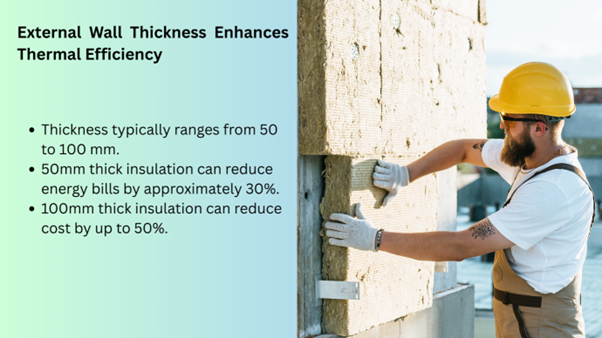
External wall insulation is installed on the outer walls of your home. There are many types of external wall insulation used but all serve one common purpose. Reducing the heat loss in your house and making warm air stay inside longer. Insulation material used could be expanded polystyrene (EPS), mineral wool, or phenolic foam.
By reducing heat loss, it shares the burden of house’s energy system. It has to work less on making the home comfortable, which results in more affordable electricity bills. You can think of external wall insulation as a thermal blanket wrapped around the home. It helps maintain a consistent indoor temperature that helps prevent fluctuations that typically strain heating and cooling systems.
EWI reduces heat loss by addressing thermal bridges. Thermal bridges are weak points in a building’s thermal envelope where heat can escape more easily.
Current UK Energy Prices
Energy prices go up and down every year. Also, consumption of every household is different. Exact prediction of how much a home will have to pay annually is not easy. In this section, we discuss the average costs in the perspective of different billing models and different home types.
Average Yearly Cost of Heating a UK Home
This depends on the size of home. Here is the breakdown:
| Gas and electricity usage | Average annual consumption | Direct Debit |
| Low (flat or 1-bedroom house / 1-2 people) | Gas: 8,000 kWh Elec: 1,800 kWh | £1,297.39 |
| Medium (3-bedroom house / 2-3 people) | Gas: 12,000 kWh Elec: 2,700 kWh | £1,838.71 |
| High (5-bedroom house / 4-5 people) | Gas: 17,000 kWh Elec: 4,100 kWh | £2,521.95 |
Prices may slightly vary depending on the payment method a customer uses. They can also be different in different (3-months) cap periods set by Ofgem.
Number 1: Customers who pay by Direct Debit under the Energy Price Cap
Let us first check the current energy price cap rates (1 October to 31 December 2025)
Gas
Unit rate: 6.29p per kilowatt hour (kWh)
Standing charge: 34.03p per day
Electricity
Unit rate: 26.35p per kWh
Standing charge: 53.68p per day
Now come the new energy price cap rates (January 1, 2026 to March 31, 2026)
Gas
Unit rate: 5.93p per kWh
Standing charge: 35.09p per day
Electricity
Unit rate: 27.69p per kWh
Standing charge: 54.75p per day
Number 2: Dual-fuel customers who pay by prepayment under the Energy Price Cap
Let us first check the current energy price cap rates (1 October to 31 December 2025)
Gas
Unit rate: 6.06p per kWh
Standing charge: 34.04p per day
Electricity
Unit rate: 25.54p per kWh
Standing charge: 53.68p per day
Now come the new energy price cap rates (January 1, 2026 to March 31, 2026)
Gas
Unit rate: 5.72p per kWh
Standing charge: 35.09p per day
Electricity
Unit rate: 26.84p per kWh
Standing charge: 54.75p per day
Number 3: Customers Who Pay on a Receipt of Bill
Let us first check the current energy price cap rates (1 October to 31 December 2025)
Gas
Unit rate: 6.62p per kWh
Standing charge: 41.76p per day
Electricity
Unit rate: 27.81p per kWh
Standing charge: 61.82p per day
Now come the new energy price cap rates (January 1, 2026 to March 31, 2026)
Gas
Unit rate: 6.25p per kWh
Standing charge: 42.91p per day
Electricity
Unit rate: 29.23p per kWh
Standing charge: 62.97p per day
How Much Does External Wall Insulation Cost in the UK?
The question may have different answers in every case. The cost of External Wall Insulation in London and entire UK depends on various factors like material chosen, location, and property size. However, the typical price range is around £100 per meter square. Let’s discuss different factors that affect the cost.
Number 1: Property Size
Here are the rough estimates for different property types:
| House Type | Total Cost Range | Yearly Energy Savings |
| Detached | £15,000 – £22,000 | £400 – £500 |
| Semi-detached | £10,000 – £16,000 | £300 – £400 |
| Mid-Terrace | £8,000 – £12,000 | £250 – £350 |
| Apartment | £6,000 – £10,000 | £150 – £250 |
Number 2: Material Costs
Different things like adhesives and fixings are needed to attach the insulation to the wall properly. We also need to install a protective mesh to prevent cracking. That also makes the home look nicer. Roughly, these costs will be as follows:
| Material | Average Cost Per Metre Square |
| Insulation Boards | £5 to £35 |
| Adhesive and Fixings | £7.5 m2 |
| Reinforcing Mesh | £3.5 m2 |
| Render (Base and Top Coat) | £14 m2 |
| Primer | £2 m2 |
| Finishing Materials | £4 m2 |
Ensure that you invest in high-quality materials to get the best results. Professional external wall insulation installers UK will always be there to help you.
Number 3: Labour Costs
Labour costs are the major elements just like any construction project. They also vary a lot from project to project, but the typical range is between £60–£300 per m². Labour costs can change a lot depending upon the complexity of the work and regional wage disparities influence the expenses.
Project management could be one additional aspect here. Coordination and oversight of the project fall under this category. You may have to pay an additional £300 to £600. There can also be a specialist survey and assessment between £100 and £300.
Professional installers also charge around £250 per person per day.
Number 4: Insulation Materials Used
Let us tell you about the prices of the top exterior wall insulation materials used in the UK:
| Material | Average cost per m2 |
| EPS boards | £100 |
| PIR boards | £12.50 |
| Mineral (Rock) wool | £18.20 |
| Woodfibre | £19 |
| Cork board | £19.50 |
| XPS boards | £21.50 |
Number 5: Scaffolding
Is your home more than one story or is located in hard-to-reach areas? If yes, you may also require scaffolding. The typical cost is £200 to £500 per week. This includes both the erection and dismantling of the scaffolding.
Sometimes, you have a lot of debris when the insulation work is done. In this case, you may have to hire a skip. This cost ranges from £125 to £320 per week. However, every thermal wall insulation company may have different scaffolding prices.
Number 6: Planning Permission
Normally, you do not need planning permission in UK, and this cost is not relevant. But you may need planning permission if your house is in a conversation area or is a listed building. Sometimes, houses have distinct architectural features which makes planning permission necessary. It is typically around £548. But it may increase the site area exceeds 0.5 hectares.
Number 7: Repair Costs
Insulation cannot be applied on the damaged walls. If your walls need repairs, it will increase the total budget from £100 to £400.
Real Maths: How Much Can EWI Reduce Your Energy Bills?
Understanding the real financial impact requires knowing two basic factors. How much heat loss does external wall insulation reduce? Secondly, this reduction translates to how much saving according to today’s energy prices.
The Percentage of Reduction in Wall Heat Loss after EWI
But how much do you really get to save? The heat loss can be reduced to 35% by installing the external wall insulation.
Realistic Savings Based on Industry Studies
On average, 35% heat loss reduction can help you save from £140 to £700 annually on energy costs. However, that also depends on the size of home, insulation thickness and either you use gas or electricity. Here is a more detailed breakdown for different property types.
| Property type | Annual energy savings |
| Apartment | £140 to £190 |
| Terrace house | £170 to £240 |
| Semi-detached house | £290 to £405 |
| Detached house | £500 to £700 |
Savings Based On Insulation Type
| Insulation Type | Annual Savings |
| Loft Insulation | £150 and £250 |
| Internal Wall Insulation | £200 to £450 |
| External Wall Insulation (Solid) | £250 and £450 |
| External Wall Insulation (Cavity) | £40-£100 |
To calculate the real financial benefit, you can use a simple formula:
Annual heating bill × % reduction from EWI = Annual savings
Payback Period: When Does EWI Pay for Itself?
A large investment does take some time to payback. Exact number of years not just depends on the current prices of materials and labour, but also the energy prices in coming years. But generally, it takes minimum eight years (if grant used and other conditions are also ideal). The payback time can also change depending upon you take any grant or not.
| Scenario | Payback time (no grant) | Payback time (with grant) |
| Detached house | 12–15 years | 8–10 years |
| Semi-detached house | 15–20 years | 7–8 years |
| Mid-terrace | 11–13 years | 5–7 years |
How Grants Reduce the Payback Time?
Grants reduce the initial investment. We know that payback period is how long it takes for energy bills to equal the initial cost of installation. Here is how the maths work:
Payback Period= Total Investment/Annual Energy Savings
Total investment is no more the same when you take grant. The formula becomes like this:
Payback Period= (Total Investment – Grant Cost)/Annual Energy Savings
Additional Financial Benefits That Decrease the Payback Period
Lower bills are the major incentives of external wall insulation, but there are some other perks too, that often get overlooked:
- Indoor Comfort: Getting your home insulated makes it cosy and comfortable. External wall insulation even helps with noise reduction.
- Aesthetics: External wall insulation also enhances the look of your home, combined with render finish.
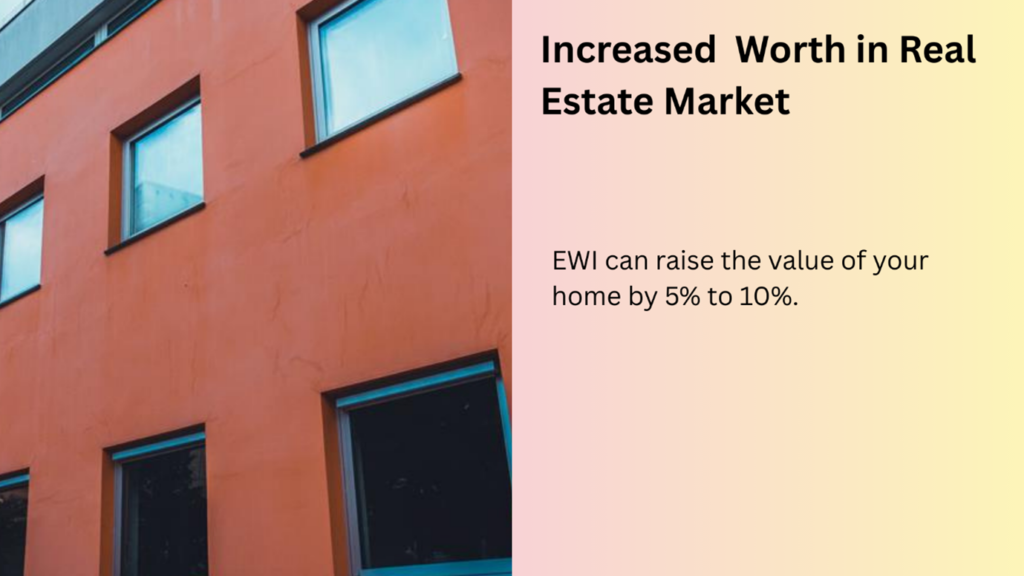
- Increased Property Value: Beautiful and comfortable homes give you good sale value.
- Moisture, Mould, & Damp Reduction: These great benefits mean you need fewer repairs.
Expert Verdict: Is EWI Worth It Financially?
While external wall insulation cost is never so low, it does pay back. Also, the benefits like reduced carbon footprint of your home, warmer indoor temperature, and great aesthetics make it worth spending.
The blog covers the major costs and average expenditure of getting external wall insulation. However, you can get an exact quote from a reputable supplier. Get in touch with a reputable external wall insulation companies, and they will do a survey of your house to tell you the exact cost. One of the trusted options is to reach out to Exterior Rendering Systems if you want to engage with external wall insulation experts in London and south of the UK.
